• Home
  • Books
  • Store
    • Ebooks
    • Merchandise
    • Discussion Guides
    • Signed Editions
  • Series
    • Yonder
    • Restless Classics
    • The Face
  • Programs
    • Kellman Prize for Immigrant Literature
    • Immigrant Writing Workshops
    • Immigrant Writing Lab
  • About
    • Our Mission
    • Our History
    • Our Team
    • Our Board
    • Our Supporters
  • Support Us
  • Resources
  • Blog
  • Readers Club
  • Contact Us
  • Return Policy
  • Menu

Restless Books

  • Home
  • Books
  • Store
    • Ebooks
    • Merchandise
    • Discussion Guides
    • Signed Editions
  • Series
    • Yonder
    • Restless Classics
    • The Face
  • Programs
    • Kellman Prize for Immigrant Literature
    • Immigrant Writing Workshops
    • Immigrant Writing Lab
  • About
    • Our Mission
    • Our History
    • Our Team
    • Our Board
    • Our Supporters
  • Support Us
  • Resources
  • Blog
  • Readers Club
  • Contact Us
  • Return Policy

An Entire Civilization in My Hands: An Interview with Hamid Ismailov

December 10, 2013 in Interview, Fiction, Travel

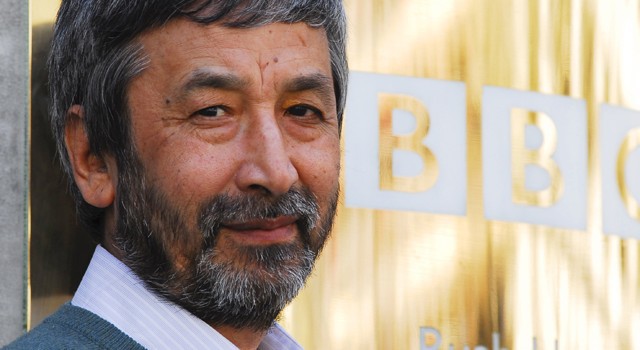
Driven from his native Uzbekistan for his “unacceptably democratic tendencies,” the journalist, novelist, poet, and broadcaster Hamid Ismailov has emerged as a unique narrator of late-Soviet and post-Soviet life. His inventive books draw from the vicissitudes and absurdities of his own experiences, at home and in exile.

Now settled in London, he has worked for many years at the BBC Central Asia Service and as the Writer-in-Residence for the World Service. Though his works are banned in Uzbekistan, he has published dozens of books in Uzbek, Russian, French, German, Turkish, English and other languages. His novels have drawn comparisons to the great satires of Gogol and Platonov, as well as the multifarious sagas of postcolonial writers like Rushdie.

The Underground, published by Restless Books in December, is the story of a lonely child, Mbobo, adrift in Moscow as the empire unravels. Half African and half Siberian, he is an outcast who finds belonging only in the faceless darkness of the subway.

Tell me a bit about the place you were born and where you grew up.

From the very beginning my life was nomadic. I was conceived in the Fergana Valley but my mum decided to go visit her relatives in Kyrgyzstan. She gave birth to me there. We moved back and forth and finally back to Fergana Valley. My mother died when I was twelve years old so I moved to my granny’s house. All my life, I have been traveling. All my life, I have been nomadic. Funny enough, London has been the place I have lived the longest.

Did you—as a child in the far, far Eastern corner of the Soviet Union—have an image of Moscow?

Yes, for us, Moscow was the Kremlin. In our kindergarten we used to draw pictures of the Kremlin. But I was a lucky person, because my step-granddad used to work for a railway company and he used to travel. He was a cook in the restaurant coach. He used to travel across the Soviet Union. In 1962, when I was eight years old, he took me to Moscow. That’s when I realized that Moscow was more than just the Kremlin. It was a huge city with lots to see, including the Underground. I had the innocence of a provincial. My perspective was like Mbobo’s.

How did reading and writing enter your life?

I recently started to collect books from my childhood. I only just realized that these were the books my mother used to read. I had only read them in secret. I’ve started to collect the same editions, with pictures in them. These were mostly Russian books. At the same time, my father used to read the Uzbek epics. I used to read those enormous, thousand-page books as well.

When I moved in with my granny after my mother died, I became her reader. She would ask me to read to her from the Thousand and One Nights. I’d spend long evenings reading to her from that book, and I became saturated with it. Now when I read it, I find all sorts of things I am just now exploring in my own writing.

My first novel was in Uzbek. I showed the novel to an older writer who had lived through Stalin’s purges. He told me, “This will never be published. You’ll be arrested. You need to drop this and write in Russian.” I realized that, because of my experience, I was holding an entire civilization in my hands. I knew the Soviet experience, and its aftermath, from so many perspectives. The whole civilization was exploding inside me and it started to come out in the form of novels.

What were the circumstances that led you to leave Uzbekistan?

I went to Moscow as the representative of the Uzbek Union of Writers. It was my job to promote Uzbek literature. Then came perestroika, and we wanted to organize a foundation to support democracy in Central Asia. The Uzbek government considered this to be subversive activity. All the member of these foundations were arrested and beaten and so forth.

As the Soviet Union was breaking up, I returned to Uzbekistan but kept one foot in Russia as a correspondent for a Russian newspaper. But I was under threat of imminent arrest. They didn’t like that I was writing in Russian, for Russians. Anything in Uzbekistan can be politics. Whatever you write, even private things, become political. Freethinking is political. Then there was an attack on my house and I realized just how dangerous it had become. So I decided to leave the country. We hid in Moscow for a while. A friend warned me that there was a bounty on my head. They knew where I was. They knew I was planning to go to France. They knew everything.

It was a dreadful period of my life. We were hiding in different apartments, in different houses. This was before mobile phones, so I would call my wife from different phones to tell her where I was; she would call back and tell me where she would be waiting for me. It was about half a year before we managed to make it together to France. Our daughter was still in Tashkent. She was a kind of hostage—we knew they would use her to get to us. It took another year to get her out of the country.  She was twelve years old.

She was separated from her parents at the exact same age as when you lost your mother.

That’s true. You are really formed at that age. The rest of your life is spent on projections of what happened at that age. I have always known there was a void within me, which I try to fill with novels. This void came into my life when I was twelve.

Is that why your books so often describe the world through a child’s eyes?

Something I’ve discovered about myself is that I mostly like to write about children and old men. During Soviet times, the life of an adult wasn’t much to write about. It was formal, institutional, not interesting at all. The only human moments in life came at the entry point and exit points. Children still saw an unspoiled reality. Old people could still remember pre-Soviet life. The generation of my father, though, was a lost generation.

What about your daughter’s generation?

I must make a confession: The Underground is very much about her childhood, as well as mine. I was thinking a lot of her experience and seeing the world through her eyes. Her generation wasn’t spoiled by the Soviets.

What drew you into this story about this half-African child in Moscow? What does his background—his strangeness and exoticness—mean to you?

I have another confession: the idea for the book came all in one night, around 2005. I was in Moscow in the wintertime. I went to visit our old flat. It is occupied by a friend, but one room has been mostly untouched. It was like we had left yesterday. And outside it was snowing, and I was filled with nostalgia.

When I came back to London I started to write. I wrote fifty pages about myself in Moscow, about this nostalgia. But it wasn’t what I wanted to write.  Then I remembered a line from Pushkin: “Moscow... how many strains are fused in that one sound for Russian hearts!” And Pushkin was only half Russian, with African heritage. But he saw much deeper into the Russian heart than any ethnic-Russian writer. So I decided to write the story of another Pushkin.

BUY FROM 

Amazon

Barnes & Noble

Apple

Kobo 

Get Email Updates from Restless
Tags: Moscow, Russia, Uzbekistan, BBC World Service, Moscow Metro, subway, Pushkin, Soviet, Hamid Ismailov
1 Comment
Musharraf-Ali-Farooqi-web.jpg

Books are a Destiny: An Interview with Musharraf Ali Farooqi

October 30, 2013 in Fiction, Interview, Translation, Books

Acclaimed Pakistani novelist Musharraf Ali Farooqi has a patient eye for domestic detail and a sweeping historical imagination, qualities that have earned him comparisons to both Jane Austen and Salman Rushdie. Though he writes in English, his prose maintains a deep connection to the Urdu language, from which he is also a distinguished literary translator. His latest novel, Between Clay and Dust, dramatizes the unfolding tragedy of those left behind by a society in transformation. Set at the time of Partition, Farooqi has written an elegy for the shared cultural traditions lost in the sectarian division of India and Pakistan. The book was nominated for the 2012 Man Asian Literary Prize.

He spoke to executive editor Joshua Ellison by Skype from his home in Lahore.

JE: Let’s start at the beginning. Tell me a bit about where you were born and a bit about your family.

MAF: I was born in Hyderabad, Pakistan and my father taught Philosophy at the local university. We stayed there until I was in my first year of engineering. I lost interest in that, so I came to Karachi, where the rest of my family was living. I spent time in Karachi, sort of still going to the university but wasting time. Well, I wasn’t exactly wasting my time: I was in the canteen having my breakfast and reading poetry. I studied French for a bit. I tried to study German but I couldn’t. Books are a destiny. Writing is not really a destiny; it’s your love of books. You might become a librarian, an editor, a publisher, anything. Anything related to books, even a second-hand bookseller maybe.

You just knew you wanted to be surrounded by books.

Yes. I’d read some fantastic books, and I’d read some very boring books, thinking: I can write better than this. A boring book, I think, is a great aid to a writer because that gives you the confidence that you might also be able to publish something.

If they were all masterpieces, you’d just never start.

Yes, yes.

What kinds of books were around you as a child as you were discovering your love of reading?

There were lots of picture books. There were books you’d call Young Adult today, but these were all in Urdu. One of my cousins was very big on bringing books as gifts; I devoured my sister’s whole collection. There was also a small neighborhood library where I would borrow books and so would some of my friends. The kind of books I read, some of them—I only later found out—were translations like Oliver Twist and the Urdu Robin Hood, Tarzan. I believe my first serious book—what you would call serious literature—was Thomas Hardy’s The Mayor of Casterbridge, and that had a great influence on me. It shocked me that a child could be abandoned by his parents. That was the first exposure to literature that could change your view of the world.

Did you read it in Urdu translation?

No, this was in English, from my father’s library. He would always tell me to read the classics. He would say, read A Tale of Two Cities and David Copperfield and Decline of the West and all of these books. But my English reading ability was not very good because I went to a terrible school. So it was all self taught:  when I had exhausted all of the other languages and I wanted to read books in English, I would read the same books over and over again until all of the definitions became clear.

Did you feel disconnected from the world that produced these Western classics?

No, there was never that feeling. When we later moved to Canada, people would ask how different everything looked. With television, though, you see the whole world. We would watch programs in English, California Highway Patrol, CHiPS—you know that program?—and Knight Rider. Long before TV, it was the foreign books I read—for me, Poe only existed in Urdu. His work felt like an Urdu-language world, maybe a bit darker, but there was no effort in entering that world.

Why did you return to Pakistan from Canada?

I came back to Pakistan because my father was not well and I stayed. Before I left Pakistan, I was a journalist for Pakistan’s English-language newspaper. I wrote on different desks and finally they gave me the book review page. We used to have syndicated service from the Washington Post and The Los Angeles Times. I don’t know if The Los Angeles Times still has its book section, but in those days they had a big one. We could carry articles from that, we had a licensing agreement and that’s when I first started reading Michael Dirda. I am still a big fan of his.

Could you get the books you were reading about?

No, not the books. Just the reviews.

When we moved to Canada, I did not have a degree and, even though I had a lot of experience in Pakistan as a reporter, I knew I would have a hard time. I knew that I would have to do odd jobs, which I did. So, you know, working in Taco Bell, Pizza Hut, and Arby’s and you know all these places, just so that it could give me time to write. That was my idea, that in the three or four years it takes to nationalize, I would use that time to write my first novel, which I did in those days.

And at that point, were you writing in English?

Yes, yes.

When did you make that decision or transition?

I’d come to the decision that I wanted to be a professional writer and I may not be living in Pakistan, so it did not make sense to continue in Urdu. By then, most of my reading was in English. When you sit down to think, the expression that comes to mind is in the language that you read most. But, even now, sometimes I think that I could have written Between Clay and Dust in Urdu.

What do you think would have been different, besides the language?

Not much, really. People who know this culture intimately and have a grounding in Urdu literary history, when they read this novel, they tell me they feel like they are reading a novel in Urdu in English translation. That’s their feeling. But, at the same time, a friend of mine who is translating this novel now–he’s one of Urdu’s leading poets–he is having a very hard time translating it, although he has translated Marquez. He said, you know, if this weren’t so close to Urdu, I would have been able to translate it much more easily.

When I was writing, I felt in had to work in its own culture, there had to be no compromises on that. There are things an outsider might have trouble understanding. If so, at least this novel will remain true to the culture to which it belongs.

At the same time, there is a very deliberate kind of ambiguity to the novel’s setting. It doesn’t tell us if we are in Pakistan or India. It is set somewhere on a continuum between the two cultures, rather than on one side of the border or the other.

I made a conscious decision to give no indicators of a nation, or a country, or even a city. This novel is based in a culture that is common to both people. I had not been to India when I wrote this. I did not know what an Indian street looked like. But, you know, take any old alleyway on the subcontinent and most of them would like alike. The Partition is just a time even. It has not changed the geography; it has not changed how we live.

I had not even seen a wrestling arena when I wrote this, I just read about it. A few months after the book was published in India, I came to Lahore, where I currently live, and I saw an akhara for the first time. It was not very different from how I’d imagined it.

Do you feel that writers in Pakistan have a strong cultural voice? Do people pay attention?

I would say that people do pay attention, because you have a certain status as a writer. But this is a society where much bigger forces are at play. You can say, I support this cause and that cause, but in reality it’s about as significant as favoriting a tweet.

Are writers expected to be political?

I do have a political outlook and will write about it occasionally when called upon. But I usually avoid it because writing itself—even if you’re writing fantasy—is a kind of political statement. You are discarding reality as it is given to you and creating a different world, so that can be a political statement. But, of course, when you could possibly make a difference in people’s lives by supporting their cause, then that is something that has to be spoken about. 

Buy from

Amazon

Barnes & Noble

Apple

Kobo 

Get Email Updates from Restless
Tags: Pakistan, Lahore, Karachi, Toronto, India, Musharraf Ali Farooqi
Comment
Stavans2011.1.JPG

Publisher's Note

October 15, 2013 in Travel, Memoir, Fiction, Translation, Essays

Dear Readers,

Restless Books is a new digital publisher devoted to books from all around the globe. What defines us is right there in our name: the restlessness of modern life, the impulse to go to new places, both physically and with our imagination. Our objective is to create a community of readers passionate about other cultures and other languages; who share an interest in how people tell stories. We are committed to bringing the best of international literature—fiction, journalism, memoirs, poetry, travel writing, photography, and graphic novels.

“Our objective is to create a community of readers passionate about other cultures and other languages; who share an interest in how people tell stories.”

Musharraf Ali Farooqi, a celebrated novelist from Karachi, Pakistan, is the first of the incomparable writers we take special pride in introducing to a wide, global audience. His latest masterwork, Between Clay and Dust, tells the stories of a great wrestler and an aging courtesan. In the aftermath of Partition, we watch their lives and their dignity unravel as they are wrenched into a new and strange society. As one reviewer puts it, “South Asian literary circles have been abuzz over a highly original fictional look at the subcontinent in the years following Partition that also doubles as a poignant study of life's transience.”

Our debut will also include a bracing new work by award-winning poet Jimmy Santiago Baca, who discovered his poetic voice while serving six years in prison. Baca has written a gorgeous short text in which he meditates on his own face, what people see in it, and how it often misrepresents him. The Face is published together with two extraordinary collections of poetry, The Lucia Poems and The Esai Poems, each about one of his children. Delve into Baca’s luminescent writing and you’ll understand immediately why Jimmy has been called “one of America’s foremost poets.”

We also have The Israeli Republic, an extraordinary account by the Iranian writer Jalal Al-e Ahmed of a trip he made to Israel in the 1960s. His travelogue, lucidly translated by Samuel Thrope, is like a view from another dimension into the conflicts of the Middle East. Al-e Ahmed is a master of subtle philosophical and political landscapes. We can promise that this book is like nothing you have read before about Israel and Iran.

Next, we bring you stateside again, to a cultural landscape changing before our eyes. 125th Street: Time in Harlem, is a photographic book by Isaac Diggs and Edward Hillel on the transformation of America’s great cultural Main Street. Through their lens—and through essays by prominent critics Vicki Goldberg of The New York Times and Greg Tate of the Village Voice—readers will get a close-up look at a neighborhood in transition, and a heritage up for grabs.

Add to this The Art of Protest, about the controversial Oakland print-making workshop Tupac Taller Amaru, whose posters on immigration and other timely topics have galvanized protesters around the country. With a powerful introduction by award-winning journalist Rubén Martínez, The Art of Protest gives a face to activism rarely acknowledged by the media.

The next year will bring all sorts of treasures and discoveries: science fiction from Cuba and Poland, classic travelogues from extraordinary women, border stories from Mexico, and many more that we look forward to unveiling. So be sure to follow us on Twitter and Tumblr, like us on Facebook, and visit our blog for regular news and more great reading.

“The next year will bring all sorts of treasures and discoveries: science fiction from Cuba and Poland, classic travelogues from extraordinary women, border stories from Mexico...”

We are told that the publishing industry is going through seismic changes, that books don't matter anymore. This is a crisis not only affecting literature, but also the way stories and viewpoints are conveyed in our culture. All this might be true—but a time of crisis is also a time of opportunity.

At Restless, we want to bring you narratives and ideas from different corners of the globe, because we believe our lives will be richer because of them. Books may be undergoing a transformation but, in some shape or form, they will always be with us. In books we discover who we are and, through books, we can travel to previously unknown worlds.                      

Exploring those worlds is your duty as a reader. Ours, as publishers, is to put the right books in front of you.

Adelante,

Ilan Stavans, Publisher

Get Email Updates from Restless

​

Tags: New York City, Uzbekistan, Israel, Ilan Stavans
1 Comment
Prev / Next

Restless Blog

Excerpts

Featured
Read an excerpt from Praveen Herat's Between This World and the Next
Announcing the Finalists for the 2022 Restless Books Prize for New Immigrant Writing
Preview the Illustrations for "It's OK, Slow Lizard," a Mindful Picture Book from South Korea
 

Op-Eds


Interviews

Featured
Talks on Translation with Restless Authors and Translators
Words (for Kids!) without Borders: Ilan Stavans on Yonder: Restless Books for Young Readers
 
Subscribe to Our Newsletter