
 Image 1 of 1
About the author
Virginia Woolf (1882-1941) is the author of acclaimed works of fiction like Mrs. Dalloway (1925) and To the Lighthouse (1927) as well as the feminist call to arms, A Room of One’s Own (1929). Born to a wealthy family in South Kensington, London, Woolf was the seventh child of eight. Her mother died in 1895 and Woolf experienced her first mental breakdown; two years later, Woolf’s stepsister and surrogate mother, Stella Duckworth, also died.
After attending the Ladies’ Department of King’s College London, Woolf started to write seriously with the encouragement of her father. Woolf’s father died in 1905 and Woolf experienced a second mental breakdown. She married Leonard Woolf in 1912 and in 1917 they founded Hogarth Press.
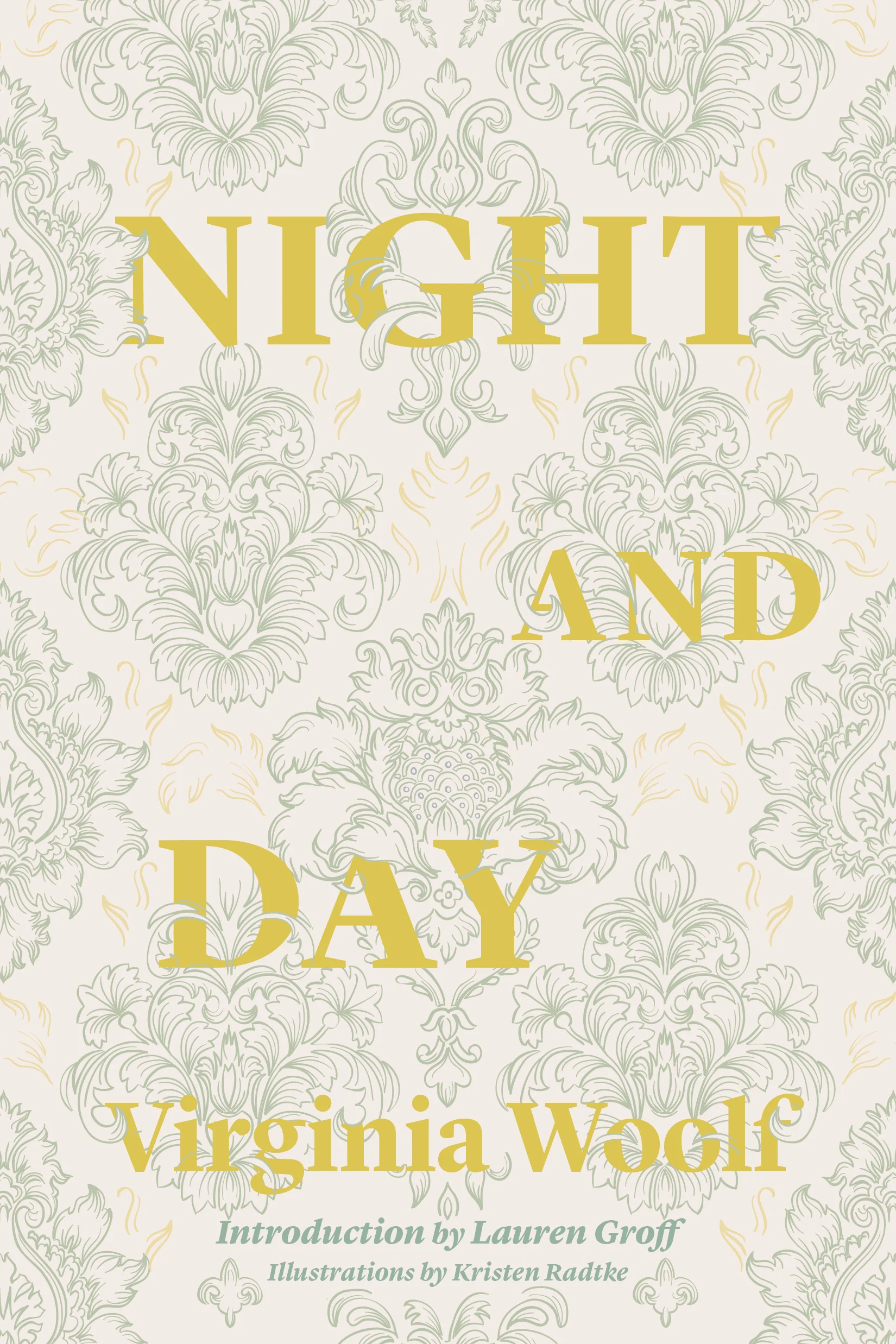
At the age of 37, Woolf published her second novel, Night and Day. She continued to have a successful literary career and is remembered as one of the most important modernist writers of the twentieth century. Woolf also had an affair with peer and author Vita Sackville-West, who is the inspiration for the main character in Orlando (1928). At the age of 59, Woolf drowned herself in a river; she struggled with bouts of depression and bipolar disorder throughout her life.
About the introducer
Lauren Groff is the author of five books, including the National Book Award Finalists Fates and Furies and Florida. She is a Guggenheim and Radcliffe Fellow, and in 2018 she was named one of Granta's Best of Young American Novelists. She lives in Gainesville, Florida.
About the illustrator
Kristen Radtke is the art director and deputy publisher of The Believer magazine and the author of the graphic nonfiction book Imagine Wanting Only This. She is at work on a graphic essay collection, Seek You: Essays on American Loneliness, and Terrible Men, a graphic novel, both forthcoming from Pantheon. Her writing and illustrations have appeared in The New York Times Book Review, Marie Claire, The Atlantic, GQ, New Yorker’s “Page Turner,” Oxford American, and many other places.
Book Details
Paperback: $22.99
ISBN: 9781632060327
eBook ISBN: 9781632060334
Publication date: Jul 9, 2019
6” x 9” • 480 pages
Territory: World
Other buying options
Amazon | Barnes & Noble | Google | iTunes | Kobo
Restless Classics
We all have “the list”: those classic books that we have the best intentions of reading, but which, after graduating from school, become less urgent priorities. We've set out to address this problem with Restless Classics—a series of beautifully packaged, newly introduced and illustrated great books from the past that still speak to our time, our place, and, especially, our restlessness. In addition to their original artwork and fresh introductions, various Restless Classics are accompanied by online explanatory videos you can access on this site.
Praise for Virginia Woolf
“If Woolf was better acquainted with profound sorrow than most, she was also, by some mysterious manifestation of will, better than almost anyone at conveying the pure joy of being alive. The quotidian pleasure of simply being present in the world on an ordinary Tuesday in June. That's one of the reasons we who love her, love her as ardently as we do. She knew how bad it could get. And still, she insisted on simple, imperishable beauty, albeit a beauty haunted by mortality, as beauty always is. Woolf's adoration of the world, her optimism about it, are assertions we can trust, because they come from a writer who has seen the bottom of the bottom. In her books, life persists, grand and gaudy and marvellous; it trumps the depths and discouragements.”
—Michael Cunningham, The Guardian
“In her prose, Woolf is one of the great pleasure-givers of modern literature, and her appeal transcends gender.”
—Danny Heitman, National Endowment for the Humanities
“Virginia Woolf is regarded as one of the greatest authors of her time due to her exploration of modernism and feminist narratives, inspiring authors such as Margaret Atwood and Gabriel García Márquez. While Woolf’s pioneering, stream-of-consciousness novels received critical acclaim during her lifetime, she was affected by recurring bouts of mental illness, and died by suicide in 1941.”
—Suyin Haynes, Time Magazine
“Ambitious and innovative, Woolf was a pioneer of modernism whose texts today still entrance academics and readers.”
—Agatha French, Los Angeles Times