
 Image 1 of 1
About the author
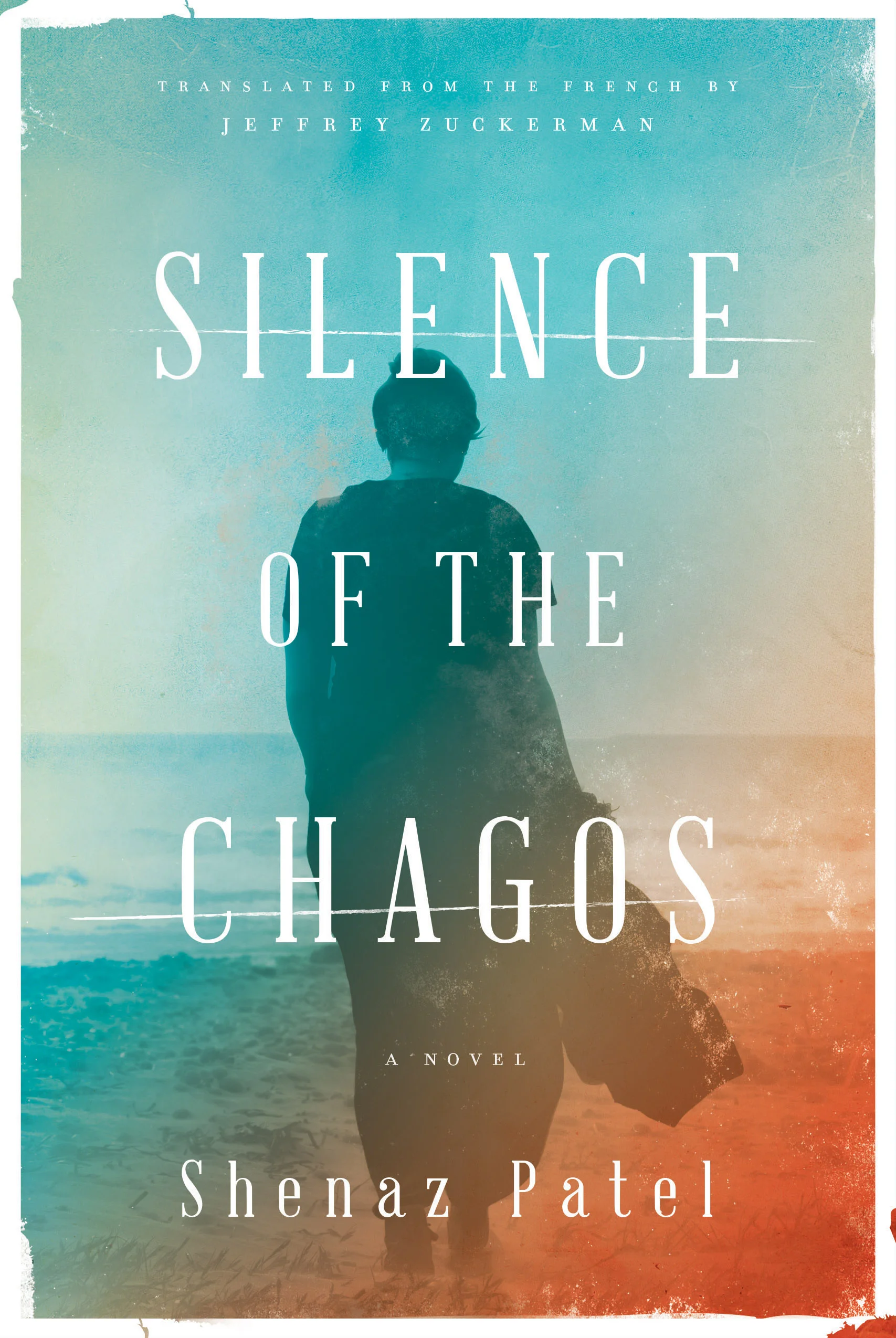
Shenaz Patel is a journalist and writer from the island of Mauritius, in the Indian Ocean. She is the author of several novels, plays, short stories, and children’s books. She was an IWP (International Writers Program) Honorary Fellow in the U.S. in 2016, and was a fellow at the W. E. B Du Bois Research Institute at the Hutchins Center at Harvard University in 2018.
About the translator
Jeffrey Zuckerman is an award-winning translator from French of titles ranging from Jean Genet’s The Criminal Child to Ananda Devi’s Eve Out of Her Ruins.
Book Details
ISBN: 9781632062345
eBook ISBN: 9781632062352
Publication date: Nov 5, 2019
5" x 7.125" • 178 pages
Praise
“There is hope in this captivating novel.”
—Philippe Sands, Wall Street Journal
“A young man's journey of self-discovery illuminates the heart-wrenching history of the Chagos Archipelago, a little-known part of the world.... Patel, a Mauritian journalist, uses her cast of characters to narrate a keenly observed story, translated from French, about displacement…. The story ... serves an important function: to inform readers about the unseen collateral damage of geopolitical games of Risk. The bullies on the playground dictate the terms since they know the weaker players have no currency they can truly leverage. A fierce and evocative telling of the strangled arc of a peace-loving people.”
—Kirkus Reviews, Starred Review
“Patel provides a clear sense of Chagossian culture amid her eloquent tracing of her characters’ pain. This is a moving exploration of helplessness in the face of global powers.”
“Forced expulsions have long been part of man’s history, motivated by politics, prejudice, geography, human-made disasters, and natural forces. Virtually unknown is the full-scale eviction of the Chagossians, a Creole-speaking native ethnic group with African and Asian ancestry, from Diego Garcia, the largest island in the Indian Ocean’s Chagos archipelago…. Patel seeks to right wrongs and secure overdue justice.”
—Terry Hong, Booklist
“A product of many years, the result is a searing, meticulously detailed account of the deportation of the Chagossian people and their struggles in Mauritius…. The novel is emblematic of the Chagossian matrifocal tradition — a child seeking knowledge of himself and of his heritage through the women of his community — but it is also an act of collective memory since it was woven not by Patel alone, but with the narratives of the Chagossians exiled in Mauritius. One of Patel’s great strengths is her ability to infuse the novel with a cornucopia of details about Chagossian culture, without the text ever feeling laden, forced, or academic…. Without these constant acts of retelling, memory’s left to die. The future’s still uncertain, but the dissemination of the Chagossians’ story is a crucial way of ensuring that the struggle lives on.”
—Ariel Saramandi, Los Angeles Review of Books
“Shenaz Patel’s Silence of the Chagos testifies to the effects of that secret exchange through three Chagossians’ experiences of displacement and the story of the ill-fated ship that transported human cargo during the island’s surprise evacuation. Dreamy and lyrical, the novel fictionalizes their experiences and captures the formless ennui of a grieving people denied not only their home, but their identity…. Patel’s compelling afterword adds a nonfiction precis that fills in many of the imagined narrative’s telling omissions…. Stateless yet forbidden to return to their island home, the Chagossians have given up on silence; Patel’s book bears witness to their struggle.”
—Letitia Montgomery-Rodgers,Foreword Reviews
“This is a beautifully written and translated story of the people of the islands of Chagos and their continuing fight to return to their homeland…. Mauritian author Shenaz Patel relates this traumatic story with gentle yet unflinching clarity of the effects of forced displacement on body, memory, relationships and identity.”
—Karla Strand, Ms. Magazine
“Shenaz Patel, a Mauritian, has penned this historical novel, bringing to light the plight of the displaced Chagossians. Their forceful evacuation, and life thereafter in Mauritius, and their appeals are revealed in some detail. Patel’s intensive research (including Wikileaks) and interviews of the displaced shows in the narrative…. This is a timely novel, in support of the Chagossians’ long struggle for repatriation…. [Its] nonlinear structure holds our interest. Highly recommended.”
—Waheed Rabbani, Historical Novel Society
“Some twenty years ago, I was struck by a photo showing barefoot women on the road facing the armed police. They were Chagossian women protesting in Mauritius with astonishing determination.” This photo, which she's never forgotten, is the inspiration for the Mauritian novelist and journalist Shenaz Patel's third book. Mingling various voices, Patel describes, in a bitter, clear-cut style, the tragedy of the inhabitants of the Chagos, those coral islands of the Indian Ocean that were turned into an American military base and whose inhabitants had been banished to Mauritius between 1967 and 1972. With a prose that seeps and stings, and a sharp sensibility, Shenaz Patel breathes life into the painful nostalgia, the lingering memories, and the eternal incomprehension of these expelled from a string of lost islands.”
—Le Monde