
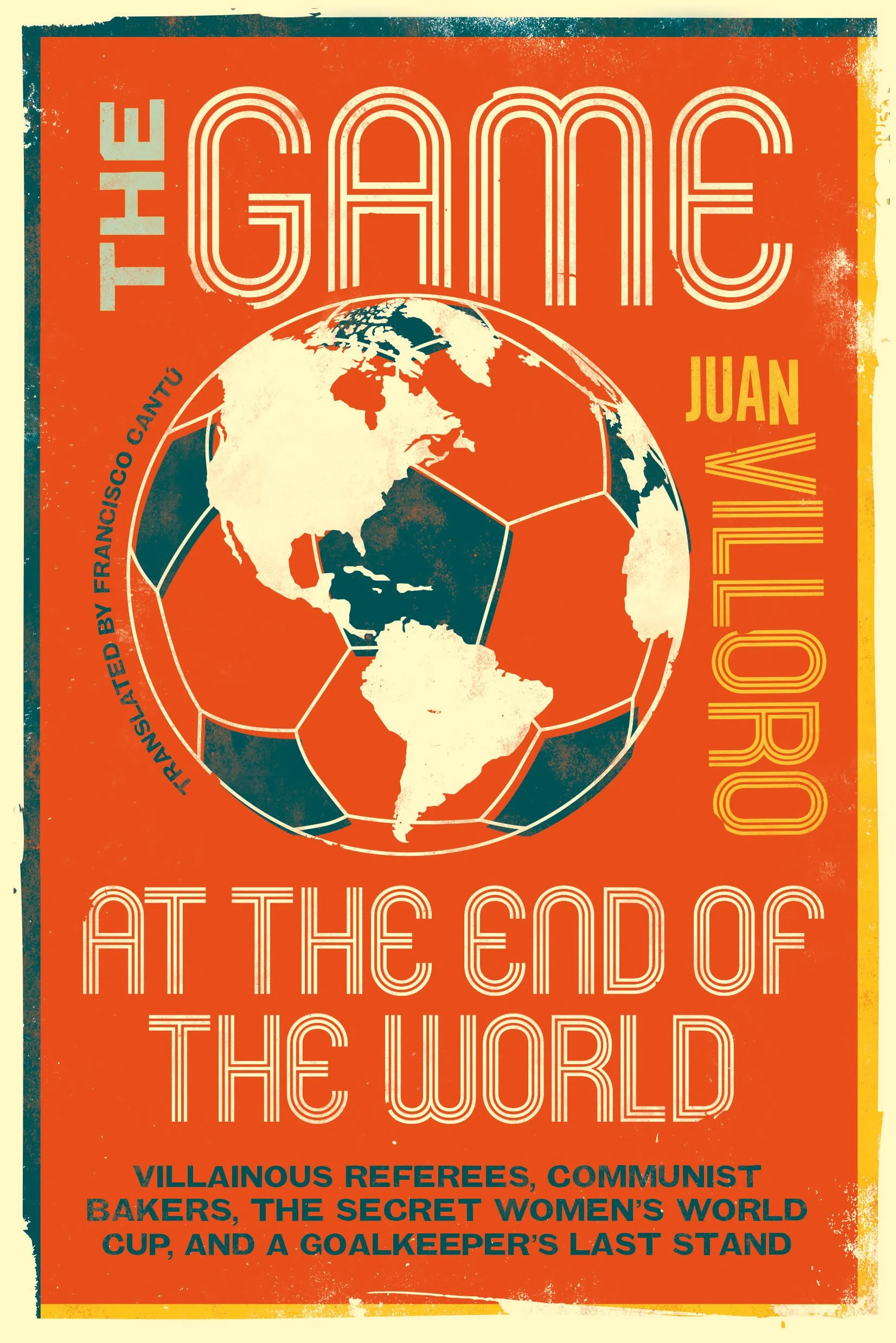
 Image 1 of 1
About the author
Juan Villoro is Mexico’s most prolific, prize-winning author, playwright, journalist, and screenwriter. He has written columns for Reforma (Mexico), The New York Times, El País (Spain), and El Mercurio (Chile), among others, and taught at Autonomous Metropolitan University, Yale, Princeton, Stanford, and Pompeu Fabra university in Barcelona, as well as at the New Journalism Foundation, created by Gabriel Garcia Márquez. His books have been translated into numerous languages, and have been awarded the Mazatlán Prize for Literature (Mexico), the Xavier Villaurrutia Award (Mexico), the Herralde Prize (Spain), the ACE Award (Argentina), and the José María Arguedas Award (Cuba). In Chile, he won the 2012 José Donoso Ibero-American Prize and the 2018 Manuel Rojas Prize for his body of work. His journalism has been recognized with the King of Spain International Journalism Award, the City of Barcelona Award, the Manuel Vázquez Montalbán International Journalism Award, and the Fernando Benítez Tribute at the International Book Fair. His novel for young people, The Wild Book, has sold more than a million copies.
About the translator
Francisco Cantú is a writer, translator, and the author of The Line Becomes a River, winner of the 2018 Los Angeles Times Book Prize and a finalist for the National Book Critics Circle Award in nonfiction. He has been the recipient of a Fulbright, a Pushcart Prize, a Whiting Award, an Art for Justice fellowship, and the Luis Leal Award for Distinction in Chicano Literature. His writing and translations have been featured in The New Yorker, The New York Review, Granta, Guernica, and VQR, as well as on This American Life. He lives in Tucson, where he is an assistant professor of creative writing at the University of Arizona and a co-coordinator of the Field Studies in Writing Program and the oral history archive DETAINED: Voices from the Migrant Incarceration System.
Book Details
Paperback • $18.00
ISBN: 9781632064110
eBook ISBN: 9781632064127
Publication date: May 5, 2026
5.5” x 8.25” • 320 pages
Other buying options:
Amazon • Kindle • Barnes & Noble • eBook
“Juan Villoro is one of my all-time people—a genuine public intellectual who wears his own importance lightly, and a truly gifted writer who manages to be hilarious, incisive, and meaningful all at once. A book by Villoro about fútbol, his favorite sport, is something of an apotheosis. The Game at the End of the World is simply a delight, and a must-read for aficionados of ‘the people’s game,’ or for anyone who loves a damned good story, well told.”
— Jon Lee Anderson
“Entertaining, perceptive analysis of soccer in the Americas and beyond. . . . For a reader seeking a wide-ranging soccer book before this year’s World Cup, this one’s hard to beat.”
“This brilliant book by Juan Villoro, one of the world’s most literate aficionados of the sport of fútbol, contains everything you need to know about its history, its heroes, its joys, and its sorrows. It also seems to me a magnificent handbook to the 2026 World Cup.”
— Paul Theroux, author of Dark Star Safari
Praise
"From fútbol’s origins to its major players, legendary rivalries, thrilling matches, and lore, this is going to be a great read for anyone with a love of the game."
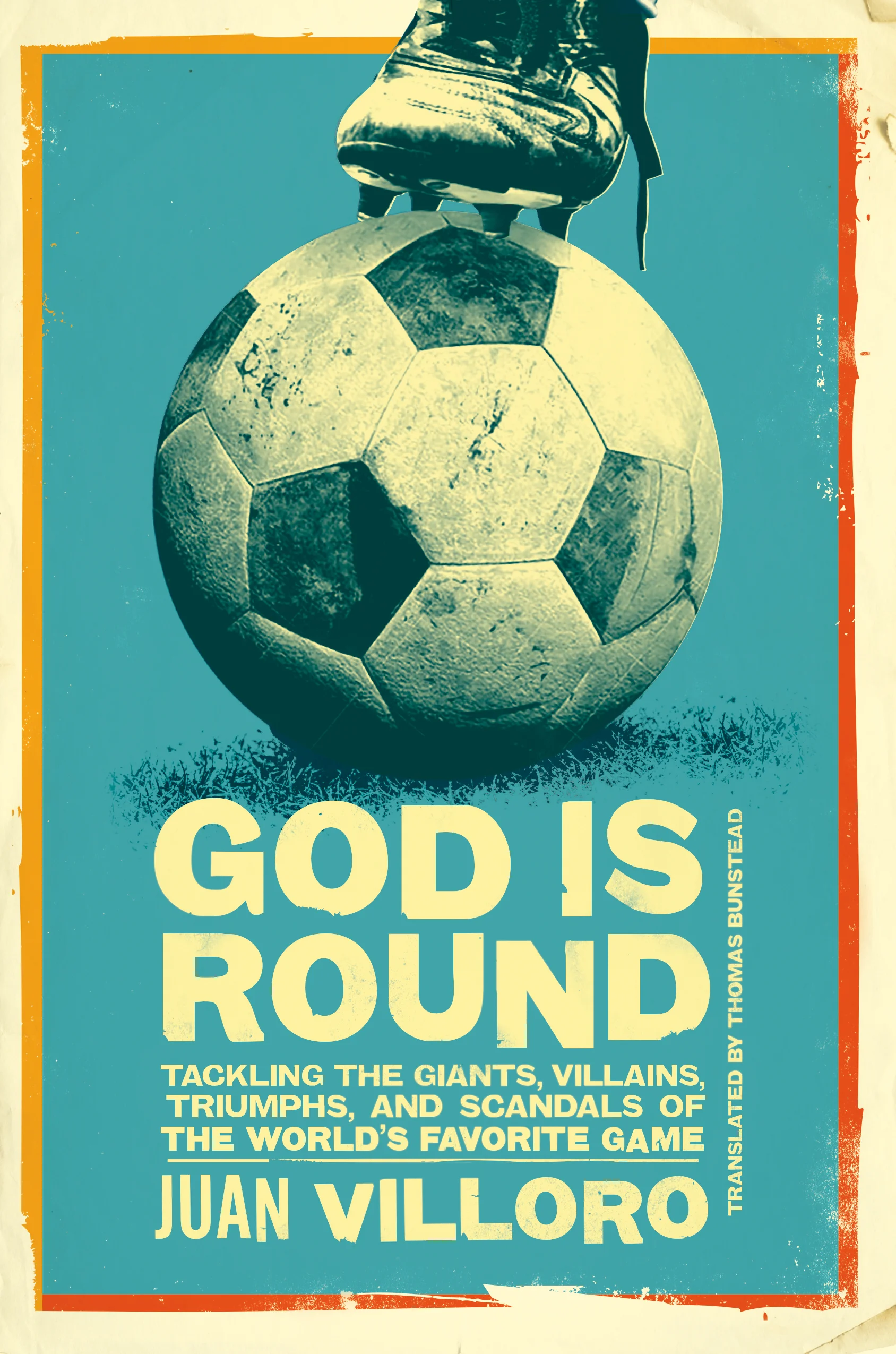
“Latin Americans... tend not to make the distinction between literature and sports writing. Gabriel García Márquez and Mario Vargas Llosa, both Nobel laureates, took to writing about the game early on in their careers. Juan Villoro is one of Mexico’s foremost men of letters. A renowned novelist, short-story writer and translator into Spanish of authors as diverse as Graham Greene, Goethe and Truman Capote, Villoro has shown... his Borgesian range of being as at home with D.H. Lawrence and W.B. Yeats as he is with the Hispanic canon. Unlike Borges, who loathed the game, Villoro is also one of the best writers on football in the world. Early on in this remarkable collection of essays, Villoro sets out his stall as a writer of sport…. God is Round will of course draw comparison with Eduardo Galeano’s paean to the game, Football in Sun and Shadow. Where Galeano hitched the lyrical to hyperbole, Villoro is a far more honest writer and thinker…. In successfully marrying his love of literature and football, Villoro has demonstrated the first principle of sports writing, or any good writing for that matter.”
—Andreas Campomar, The Spectator
By Juan Villoro
Translated from the Spanish by Francisco Cantú
Exuberant, playful, and evergreen, The Game at the End of the World revels in the grass-stained highlights of a sport without borders or boundaries.
Soccer (née football) fans will rejoice at this all-new volume of crackling essays from the author of God Is Round. Here, Juan Villoro explores the sport through the elements that make it the world's favorite pastime, from its ancient origins, mythic players, exhilarating matches, endemic rivalries, and the unlikely moments in which football has changed history.
A prolific writer and chronicler of World Cup games around the world, Villoro draws on our global cultural mosaic to inspire readers, players, and fans long after the final whistle blows. With a philosopher's wit and a journalist's ear, he has produced a book for curious newcomers and lifelong football fiends alike.
Read excerpts from the book in The Paris Review and The Rumpus