Since 2018, Restless Books has partnered with the New York Public Library and other public libraries to offer three-session workshops for immigrant writers. Hundreds of participants from around the world have joined in person and via Zoom. They engage with international immigrant literature published by Restless and produce short pieces—fiction, memoir, poetry—that are workshopped among all the participants. We hope you’ll enjoy reading these pieces as much as we did and that you will support these emerging writers now and for years to come.
— Ilan Stavans
When the Cat Comes
By Li Ruan
“You’ll understand, one of these days,” the old man said to his middle-aged son.
On the last day of October, they sat facing each other in a cozy Polish café in a quaint East Coast town. The old man’s booming voice echoed, and the other diners quieted, instinctively leaning in to listen. His commanding sound was a relic of years spent calling his seven boys at once. Today, he directed all that force toward this son, since the other six had found reasons not to join.
“I’ll be 90 in three weeks. How many times do you get to be 90 in a lifetime?” A weight settled on the son’s shoulders. None of the eavesdroppers would have guessed the old man’s age. He appeared 70, with a taut face and a full head of mostly dark brown hair. His son, short and stout with thinning hair, could have passed for his brother.
“I’ve been thinking of my mother lately,” he admitted, looking at his son. “When she was old, I didn’t tend to her much. Didn’t know how.” He took another quick look at his son. “I suppose I was spoiled, being the only boy, and I had to work hard to care for my own family.”
He waited, searching for a reaction before continuing. “When she was about my age now, especially around this time of year, she’d ask me to come closer.”
“Did you?” the son asked instantly.
“Of course!” The old man frowned. “I remember asking, ‘What would you like me to do, Mother?’”
“‘Nothing,’ she mumbled. ‘Just hold my hand.’”
He moved his gaze to the fire,“So I did.”
He fell silent, resting his left hand, with a couple of crooked fingers, on the table, open and waiting.
His son glanced down, cradling his cup with two hands, mirroring his deceased mother, who had always longed for something.
After another pause, the old man went on. “Parkinson’s gave her a false sense of reality,” he said, studying the son, who kept his eyes on the swirling brown liquid.
“‘Hurry!’ she’d call out. ‘A cat just ran under my bed.’” A faint smile crossed his face. “She never owned a pet in her life.”
He stopped with a deep exhale. “Aging is a tough process. Going through it alone... I mean… no help from loved ones... it’s hard.” He paused, gathering his breath. “You can’t know what it’s like until you’re in my place.”
Their eyes met, and a flicker of understanding seemed to pass between them. Yet his son’s hands remained wrapped around his warm mug, maintaining gentle distance.
A thin sigh slipped from the old man’s lips. The firelight dimmed in his eyes as the café neared closing time.
“You’ll know it,” he repeated, “one of these days.”
Seconds later, almost to himself, he stared at his hand on the table and murmured, “Perhaps… when the cat comes back.”
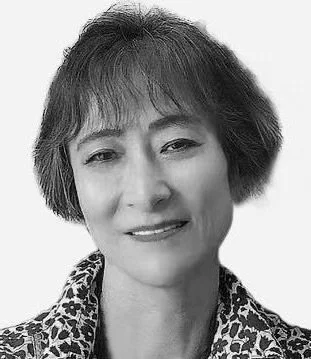
Li Ruan, born and raised in Beijing, China, is a Manhattan-based educational consultant and emerging immigrant poet and writer. She felt a special calling to write during the COVID pandemic. The New York Public Library opened the door to creative writing for her, and its partner, Restless Books, published one of her first prose pieces on its blog. Writing in English has deepened her connection to language and empowered her to promote cultural understanding. Li’s work has appeared in the Restless Books blog, Flora Fiction, Assignment Literary Magazine, Persimmon Tree, Storyhouse, Hamilton Stone Review, New York Public Library Zine, Lowestoft Chronicle, Discretionary Love, Cool Beans Lit, Shot Glass Journal, 50-Word Stories, Panorama, and New York Times.
Eagle’s Silent Cry
By Alisa Kana
Albania’s flag bears an eagle, black, proud, and fierce, stretching its wings across a red sky. For many years, that eagle could not protect its young from the storms that tore through the land. It circled above mountains and rivers, calling out with a voice both strong and mournful, watching helplessly as its babies struggled to find their way. Its claws could not hold them close, its shadow could not shelter them.
For nearly half a century, that eagle had been forced to fly in circles over a land sealed shut, its cries muted by the iron grip of a dictatorship. Borders were locked. Radios whispered only state-approved lies. Foreign books, foreign music, foreign ideas, everything was forbidden or distorted.
I was five years old the summer my parents decided to leave Albania, though nothing on the surface of that day suggested that our lives were about to split into a “before” and an “after.” It was August of 1991, the air heavy and unmoving, the sky so bright it felt merciless. I remember the stillness most of all, the kind of quiet that makes you think the world will stay exactly as it is forever. The dust on the road lifted lazily beneath passing footsteps, hanging in the heat like a veil between reality and something about to break open. Cicadas whined in the olive trees. My mother’s voice rose and fell in the small kitchen. My father smoked a cigarette outside, staring somewhere far beyond anything I could see.
I was a child, so to me, that day was indistinguishable from any other blistering summer day in Albania. But to my parents, it was the day they gathered every fragment of courage they had left and made a decision that would alter not only their lives, but the shape of mine.
Albania in those years was collapsing under the weight of its own past. The dictatorship had ended only months earlier, but its shadow still stretched long across every street, every conversation, every fear tucked into an adult’s eyes. For decades, the country had lived behind a wall of silence so thick it swallowed truth itself. People stood in endless lines for bread, as if waiting for salvation. Factories rusted into silence. Electricity flickered like a dying pulse. Misinformation seeped into daily life like humidity, heavy, invisible, always present. No one knew what was real. Everyone feared what might be.
There was a sense of living inside a house whose walls were slowly but steadily crumbling inward. I sensed the anxiety around me without understanding it. Adults spoke softly, their words coded by habit, by years of speaking only what was safe, never what was true. But silence reveals more than speech, and my parents’ silence had changed. It had tightened, sharpened, taken the shape of something decisive.
They didn’t call it courage. Immigrants rarely do. They called it necessity. Survival. Hope.
I didn’t know the meaning of “exodus.” I didn’t know what borders were, or governments, or collapse.
All I knew was that everyone was leaving and I was afraid of being left behind.
All I knew was that adults were trembling and I didn’t know if trembling meant danger.
All I knew was that the ship was huge and I was so small and the sea beyond it looked like a place where things disappeared. At some point, my mother kissed the top of my head, a quick, shaky kiss, and whispered, “We’re going to live, baby. That’s why we’re going.”
But to a child, living and leaving were the same word.
From the ground, everything looked too big for me. Too loud. Too fast. The world I knew, quiet afternoons, dusty roads, my mother’s voice drifting from the kitchen, had exploded into something unrecognizable. People were no longer people; they were waves, crashing against each other, pushing toward the ship with a force that made my small body feel breakable.
I remember looking up at the ship named Vlora and feeling as if it touched the sky. It was enormous, dark, and alive with movement. To the adults, it was an escape. To me, it was a monster. One I had to walk into even though every part of me wanted to run away. I didn’t understand why we had to climb inside it, why everyone was crying, why my father’s hand shook when it touched the back of my head.
I clung to my mother with both hands, my fingers tangled in the fabric of her dress as if it were the only thing in the world that could keep me from disappearing. People pressed against us from all sides, and I could feel their panic in the way their bodies tensed, in the sound of their breathing, short and frantic. I felt small, so unbearably small, like a pebble tossed into a river too powerful to fight.
I kept asking questions, the kind children ask when the world stops making sense.
“Why are we going?”
“Where are we going?”
“Will we come back?”
“Are we in trouble?”
No one answered. Not because they didn’t want to, but because the truth was too heavy to fit into words a child could hold. My mother just kept saying, “Hold on to me,” her voice tight, her eyes somewhere far away, somewhere past the port, past the sea, past the life we were leaving behind.
I remember the heat most of all. The sun pressed down on us like a warning. The air was thick with the smell of sweat and diesel and fear. Someone was shouting. Someone else was praying. A baby screamed so loudly it made my chest vibrate. All around me, adults moved with the urgency of people who no longer believed in tomorrow.
And in the middle of it all, I felt something unfamiliar: the sensation that the world could change in a single day, that childhood could end without permission, without warning, without even understanding what was being taken from you.
When my father lifted me off the ground to keep me from being crushed, I wrapped my arms around his neck and buried my face against his shoulder. His shirt was damp and salty. His heartbeat was too fast. I didn’t know what fear really was, but I knew what it felt like to hold on to someone who was doing everything possible not to fall apart.
As we moved closer to the ship, the crowd squeezed tighter, and people began climbing the Vlora—its ropes, its railings, its rusted skeleton—as if climbing into a different destiny. To me, they looked like creatures scrambling toward light. Some cried. Some didn’t. Some whispered the names of children they were trying not to lose.
Once the ship pulled away from the port, the chaos softened into a heavy, crowded silence. My mother held me so close I could feel her heartbeat against my cheek. Exhausted from the fear and noise, I eventually fell asleep in her arms. Albania blurred behind us like a watercolor left in the rain. I didn’t understand what we were leaving. I didn’t understand what my parents were sacrificing. All I understood was the strange taste of salt in the air and the way my mother held me pressed against her heartbeat, as if she feared the sea would take me too.
I woke up in the middle of the night. The air was cold, the sea dark, and above us the sky was filled with more stars than I had ever seen in my life. For a moment, the fear disappeared. The world felt wide, quiet, and strange, like the sky was watching over us as we crossed into a new life.
By morning, people were shouting again, pointing toward a thin line of land in the distance. Italy. The word sounded like something impossible. When we arrived, everything was noisy and bright, but all I remember is the feeling of sun on my face and my mother’s soft, shaking breath.
Soon after, we traveled to Firenze, where relatives waited for us, relatives the dictatorship had once called enemies of the country. But they welcomed us with open arms, tears, and trembling smiles.
In the place we were told our family did not belong, we found the home we had been searching for.
Firenze did not meet us with warmth, but survival rarely offers comfort at the beginning. Immigrants arrive in new countries like shadows, visible, but not yet part of the landscape. My parents worked relentlessly in jobs that drained them but kept us afloat. They learned a language born from beauty, yet spoke it at first with the trembling caution of people afraid of being misunderstood, judged, dismissed. They navigated a world that demanded paperwork, proof, and sacrifice. And yet, through all the struggle, they never let our home feel uncertain. They wrapped my childhood in a quiet, steadfast love that shielded me from the harshness outside our door.
Firenze raised me. I learned to read beneath the arches of Renaissance buildings, the scent of old stone and history settling into my lungs. I memorized Dante before I knew the full story of my own family. I walked through narrow streets lined with art that seemed to whisper invitations to look closer, think deeper. The city shaped the way I moved through the world, curious, gentle, always searching. And my parents, exhausted as they were, nurtured every dream I formed, as if giving me roots in a place where they themselves still felt temporary.
Yet growing up there meant living in a constant in-between, a quiet balancing act I didn’t fully understand as a child. At school, my notebooks were filled with perfect Italian sentences, but at home, my mother’s Albanian lullabies carried a tenderness that belonged to another universe. I learned early that I had two voices—one soft and accented for home, one crisp and fluent for the world outside. I shifted between them without thinking, the way a bird adjusts its flight without noticing the wind.
There were moments I felt Firenze down to my bones—running across the Ponte Vecchio at dusk, eating gelato that dripped down my wrists, laughing with friends whose families had lived there for generations. But there were other moments when I felt the distance—like when teachers asked where I was from and paused a little too long after hearing the answer, or when classmates joked about Albania without knowing they were joking about my history, my people, my parents’ sacrifices.
I grew up watching my parents shrink and straighten themselves depending on the room they entered. They were grateful, cautious, hopeful, all at once. And somewhere between their footsteps and mine, I learned the quiet art of belonging just enough, but never entirely.
Even as we built a life in Italy, Albania remained a shadow behind us, especially in 1997 when the country descended into chaos. I was old enough then to recognize fear, even when disguised. I remember waking to the sound of the television turned low, my parents’ faces pale under its glow. They whispered names, relatives, neighbors, friends, each one spoken like a fragile question. Are they safe? Are they alive? Will the country survive itself?
They tried to hide their fear from me, but fear has a scent, a temperature, a tremor. It hung in the air of our apartment like smoke after a fire.
My mother would go to the balcony to cry quietly, thinking the night would conceal her worry. My father spent evenings on the phone, his voice steady but his shoulders shaking. Albania was burning, and their families were inside the flames. They had escaped, but escape does not sever the heart. I watched them carry helplessness like a secret illness. I watched them learn that leaving a country doesn’t free you from loving it, nor from suffering for it.
Growing up in those years, I realized immigration was not a single event, it was a lifelong echo. It meant learning to smile in one country while grieving for another. It meant success that always carried a shadow. It meant celebrating small victories with the quiet awareness that someone you love might not survive the night across the sea.
Most of all, it meant living in two places at once, but belonging fully to neither, learning to build a self from pieces of both, and hoping that one day, somehow, that would be enough.
When we returned to Albania for summer visits, the land felt both familiar and offended. There was a strangeness in the air, as if the wind carried memories I could almost grasp but not fully hold. I was foreign in a way I didn’t yet have the language to explain. Sometimes even the way I walked felt different, as if my steps no longer matched the rhythm of the streets I once knew. My Albanian carried the soft edges of Italian, and children in the neighborhood called me “the girl from outside.” Their voices were not cruel, just curious, but they carved tiny fissures inside me.
The irony was that I longed to fit back into the place I had been born, yet I felt as if the country itself had decided I no longer fully belonged to it. It was as though the soil recognized my absence and kept a quiet distance, watching me with the suspicion reserved for temporary visitors. As if the land withheld something from me for having left it too soon.
And yet, the Albania I returned to was not the one my parents had fled. Democracy had begun, and with it came the slow, unsteady warmth of a sun rising over a long, shadowed winter. The streets shimmered differently in the afternoon light; laughter was no longer hushed, voices carried freely over stone and dust, and the air tasted faintly of possibility. It was as if the country itself had stretched its limbs after years of constraint, shaking off the frost of fear that had clung to every corner. The mountains, rivers, and olive groves I had loved as a child seemed to breathe again, and the sun, bright, daring, insistent, fell over the land like a promise that something new could take root.
I noticed it in small details: the color returned to old walls, signs of life where silence had once reigned, the way people walked with a tentative hope in their eyes. And yet, the distance I carried remained; my return was always doubled, a meeting of two selves—one shaped by exile, the other by memory. I wanted to be at home, but part of me still moved like a visitor, treading lightly on a ground that had shifted while I was away.
The land had changed, and so had I. And in that change, in the bright, trembling light of a sun finally free to rise over my country, I began to understand that belonging was not simply a matter of place—it was a dialogue between the past and the present, between memory and transformation, between the country that had held me and the one I carried inside me.
Over the years, Albania changed. Buildings rose where ruins once stood, and color returned to streets that had long been gray. It grew, healed, rebuilt itself with a stubborn hope. Each time I returned, I saw a version of my country that felt new and beautiful. Yet beauty can feel unsettling when it does not match the memory your heart carries. And yet, with each visit, an unexpected guilt settled inside me as if I hadn’t earned the right to enjoy the country it had become. Sometimes I wondered whether I had abandoned it before it had the chance to become this better version of itself. Sometimes returning hurts more than leaving. Sometimes walking familiar streets made me feel like a guest in a home that once held my entire childhood. It was a strange ache, recognition wrapped in distance.
It took me many years to understand that this ache, this confusion, this tug between worlds is the inheritance of every immigrant. It is a quiet burden we learn to carry with grace, even before we know its name. We live suspended. We carry two languages in our mouths, two landscapes in our memories, two versions of ourselves in our hearts. Sometimes the weight of those dualities settles in the chest like a stone. We learn that love multiplies but belonging divides. We learn that home is not a single place but a constellation of places, faces, and moments that refuse to align perfectly again. And somehow, we learn to breathe inside that misalignment.
And in quiet moments, I think of my parents, their worn hands, their sacrifices, their silent bravery. I think of the ship that carried us away from the life they knew. I think of the sound of the waves that night, and how small I was in the arms of two people carrying far more fear than they ever allowed me to see. I think of their fear in 1997, their hope in Italy, their longing for a homeland that had betrayed them and loved them in equal measure. I think of the child I was, straddling two worlds without realizing it. A child learning, slowly, that identity is not a single line but a tapestry woven between places.
And I realize something that feels both painful and precious. Leaving a country breaks you in ways that are almost impossible to explain. It shifts the foundation beneath your feet long before you learn to recognize the cracks. It is not a single wound but a constellation of them, forming slowly, quietly, beneath the surface of your life. You don’t notice the breaking at first; it happens gently, like the soft cracking of ice beneath your feet. You walk forward believing the world will hold you, believing you can carry the past without consequence. But one day you look back, and you realize that the moment you stepped onto foreign soil, a part of you remained behind, still breathing, still waiting, still tethered to a home that no longer exists in the same way.
Returning to that country breaks you differently. It is a rupture made not of loss, but of recognition. A shiver that runs through your soul when familiarity and foreignness collide. An intimate, painful understanding that time moves even when you are gone. You arrive to find that the streets have changed, the rhythm has shifted, the faces have aged without you. You return hoping to reclaim something familiar, but instead you discover that your absence has carved a quiet distance between you and the place that once shaped your earliest breaths. Home becomes a mirror that reflects both who you were and who you can no longer be. The land embraces you, but not without reminding you, gently, or sometimes sharply, that belonging is not guaranteed simply because your story began there.
Loving your country from far away breaks you the most. It demands a kind of devotion untouched by daily life. It is a love sharpened by distance, made sacred by longing, shaped by the ache of not being able to touch what your heart remembers. From afar, even the imperfections of home become precious. You cling to memories as if they are fragile artifacts, terrified that time will wear away their edges. You love the way the mountains looked at sunrise, the way the language curled in your mouth, the way the air felt before you knew what it meant to leave. Distance turns nostalgia into a constant companion, a quiet, persistent ache that lives beneath every accomplishment, every new beginning. It is the ache of someone who knows that loving a place from outside its borders is both a privilege and a punishment.
It is inside these breakings, leaving, returning, longing, that a different kind of strength is forged. A strength born from resilience, from silence, from the invisible stitching immigrants learn to do within themselves. It is not the loud, heroic strength people admire from afar, but a quiet, internal resilience that grows in those who carry entire worlds within them. Immigrants learn to live with fragments: fragments of language, fragments of memory, fragments of identity that never quite fuse into a single whole. And yet, somehow, they learn to build a life from these broken pieces. They learn to sit with contradictions, to navigate between cultures, to speak two emotional languages at once. They learn to belong everywhere and nowhere with equal grace. They learn to create a home in the invisible spaces between places.
Immigration is not merely a journey. It is a rebirth, one that demands surrender before it offers renewal. And like all births, it is messy, painful, disorienting, and miraculous. It strips you down before it allows you to grow. You shed versions of yourself you didn’t even know you carried. You learn to breathe in a new rhythm, to see the world through new layers of understanding. You grow into a person shaped by two skies, two histories, two emotional geographies. You become someone who can survive unraveling, because you have already survived transformation.
My story began the day the sea chose us, the day my parents became the wings the eagle could not offer. My parents gathered their courage, held my small body between them, and stepped into a future they could not predict. But my understanding of that day continues to deepen with time. With every return, with every longing, with every quiet moment of reflection, I grow more aware of the extraordinary strength embedded in that decision. Their courage was silent, almost invisible, yet powerful enough to alter the entire trajectory of my life. It is a force that still shapes me, a steady, unseen current pushing me forward, reminding me that my very existence is built upon their faith in something better.
And so, even now, years later, when I look back at our story, I feel that courage beating inside me like a second heart. It is the pulse that steadies me, the anchor that reminds me where I come from, and the light that guides me toward where I am meant to go.
What my parents were never allowed to become, I now carry within me. In the Albania they left behind, education was a controlled privilege, curiosity was suspect, and those who dared to think too deeply were labeled enemies of the country. Intelligence itself was a threat. Books were restricted. Ideas were dangerous. Dreams that reached beyond survival were silenced before they could take shape. My parents’ potential—the fullness of who they might have been—was constrained by fear, by oppression, by a system designed to keep minds small.
Now, I live with an unfinished thirst for knowledge, a hunger inherited from the generations who could not speak, could not learn, could not explore. Every book I open, every course I pursue, every question I dare to ask feels like an act of reclamation, not only for myself but for the lives that were never permitted to unfold. It is a fire that cannot be quenched, a desire to stretch the boundaries of understanding, to write, to inform, to contribute. I do not just learn. I explode into learning, into giving, into creating, because the world once denied my parents the right to do the same.
This thirst is both a weight and a gift. It carries the memory of what was lost, the echo of silenced voices, the courage that had to hide. And yet it is also the most liberating inheritance: the freedom to think, to dream, to exist fully in a world that does not punish curiosity, knowledge. It is the pulse of what could have been, now made real in me.
I walk through life aware that I embody both the limits imposed on my parents and the possibilities they were denied. I am their past, their unfulfilled potential, their quiet rebellion given form. And I offer my curiosity, my work, my words, and my ideas into the world as a tribute, a declaration that knowledge cannot be chained, and that no one who dares to think can ever truly be an enemy.
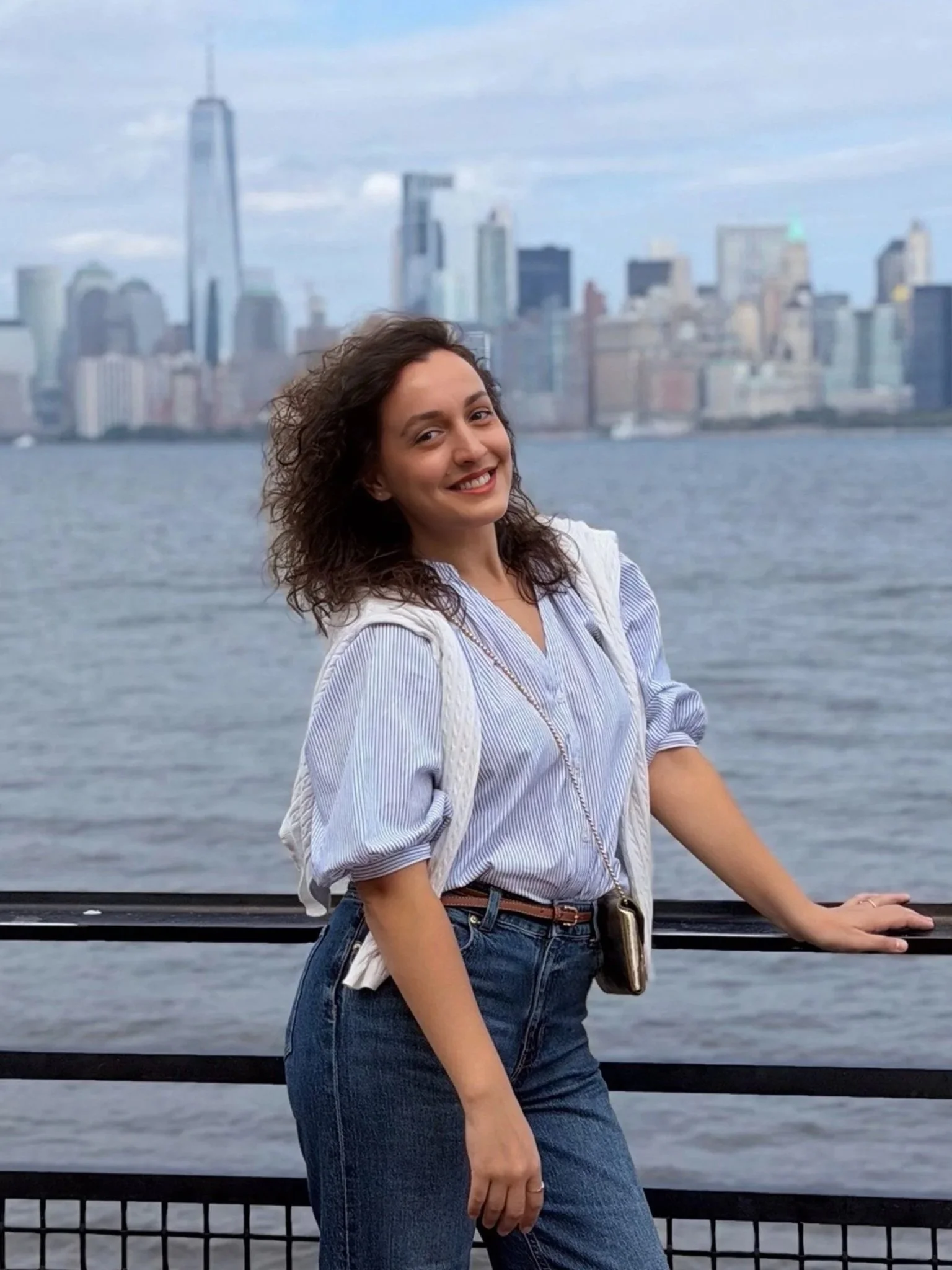
Alisa Kana is an Italian teacher and writer who finds meaning in the quiet power of language. For her, words have always been a way of seeing the world — a way to feel, to question, and to connect. Surrounded by books, she is drawn to their ability to hold both truth and beauty. Teaching, reading, and writing are not just passions, but ways of staying close to what matters most: the pursuit of knowledge, the rhythm of thought, and the poetry hidden in everyday life. Studying the English language has also given her a deep love for sharing her writing with English speakers, opening new paths for connection and expression.